

By Colonel Prem Kumar Nair (Retired)
THE INDIAN OCEAN TODAY
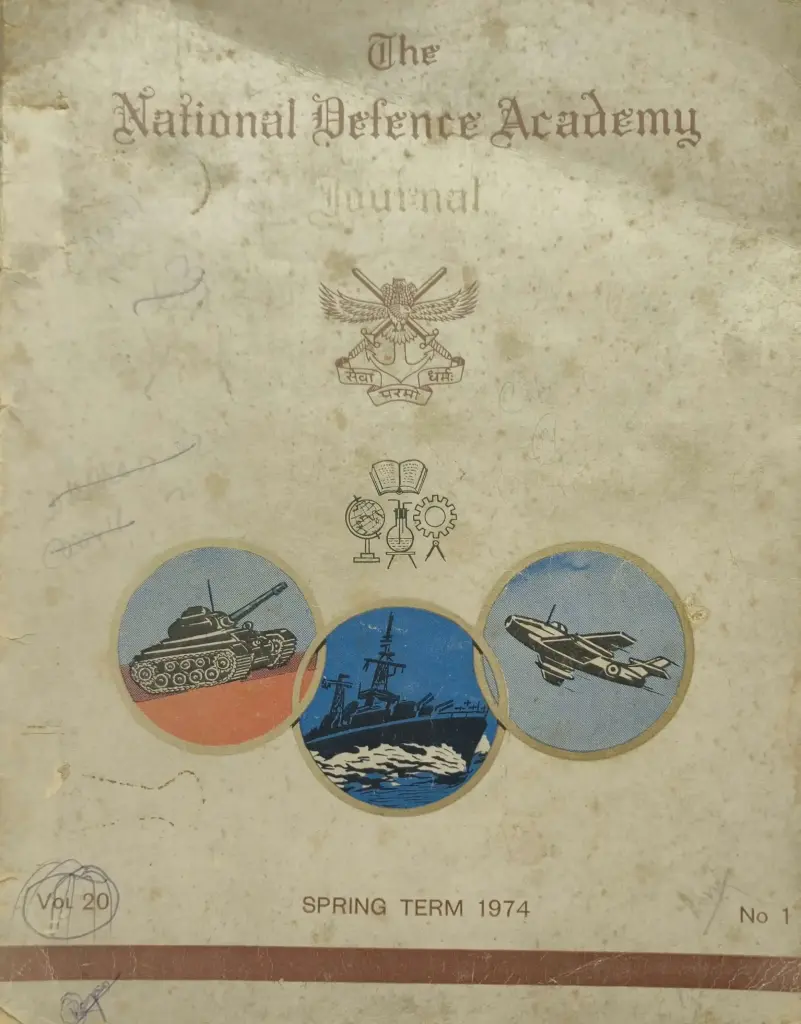
Originally published in the NDA Journal, June 1974
PK Nair
(This article was written by the author as a final-term cadet at the National Defence Academy and was published in the NDA Journal in June 1974. It is reproduced here with minor editorial corrections to spelling, grammar and presentation. The analysis and assessments remain those of the author at the time of writing.)
The Indian Ocean has been of great significance since the days of ancient Greco-Indian trade relations. Since then, much of the trade between the East and the West has been conducted through the Indian Ocean. With the growth of the Dutch, Portuguese, Spanish and British empires, commercial rivalries emerged. Economic prosperity depended upon physical control of the sea routes leading to the colonies of these empires, particularly those in the East.
Until the end of the Second World War, a large number of islands in the Indian Ocean were under British control. The situation began to change when Britain decided, in 1968, to reduce its military commitments east of Suez. The withdrawal of British forces left a power vacuum in the Indian Ocean. The strategic importance of the region has since increased, as major powers have shown considerable interest in filling this vacuum. In recent months, it has become increasingly clear that Soviet-American competition is extending into the Indian Ocean and is likely to disturb the relatively peaceful situation in the region.
Present Importance
Oil has always been a significant factor in great-power rivalry in the Indian Ocean. With approximately 60 per cent of the world’s oil resources concentrated in the Arabian Gulf region, it is hardly surprising that the major powers should have a keen interest in the area. The major industrial complexes of the world depend upon Gulf oil. This is borne out by the industrial stagnation that has set in as a result of the recent oil crisis.
The existing Soviet naval presence in the region has caused considerable anxiety in the United States. With the reopening of the Suez Canal, Soviet naval operations and shipping are bound to increase, despite the efforts towards détente. The Americans will, therefore, watch every Soviet move with suspicion and distrust. The Russians have made it clear to India that they would play the game only as long as American naval power does not assume alarming proportions in the Indian Ocean.
Besides this, the Soviet presence in Antarctica, which has grown considerably with the construction of a base there, is likely to promote Soviet interests in the Indian Ocean. This base, however, has no military significance.
It is difficult to say who is following whom—the Soviet Union or the United States.
What really matters today is that great-power rivalry has entered the Indian Ocean, despite the efforts of India and other littoral states of the region to prevent it.
Soviet Presence
The Soviet Navy ventured into the Indian Ocean for the first time in early 1968, following the British announcement of its intention to withdraw from the region. Soviet naval activity initially took the form of goodwill visits to Madras, Colombo, Bombay, Karachi, Basrah, Mombasa and other ports. These activities subsequently extended to the development of fisheries in Pakistan, at a location approximately 180 miles west of Karachi. Plans to establish a refuelling station in Somalia were also reportedly under consideration.
Twenty Soviet trawlers, accompanied by a 45,000-ton factory ship, visited Singapore in 1971. Some Western observers are of the view that these fishing vessels have the capability to serve as naval auxiliaries. They believe that the vessels are equipped with sophisticated electronic equipment that could also be employed for military purposes.
The recovery of the Zond 5 and Zond 8 spacecraft from the Indian Ocean in 1968 and 1970, respectively, further increased Soviet naval activity in the region. The Russians have also expanded their hydrographic and oceanographic surveys in the Indian Ocean since 1958, in keeping with their emphasis on the submarine arm.
The strength of the Soviet naval forces operating in the region rose from between 10 and 15 vessels in 1969 to approximately 61 in 1972, of which 27 were reported to possess offensive capabilities. Western analysts maintain that, although relatively small, the Soviet presence assumes greater significance in the absence of other navies capable of providing a counterbalance.
Soviet interests in the area are numerous. Some of the major ones are listed below:
(a) The Soviet desire to gain access to warm waters.
(b) Substantial Soviet investments in the region, amounting to billions of dollars in economic and military assistance.
(c) The desire to strengthen Soviet naval influence in the region.
(d) A strong desire in Moscow to contain and encircle China, and to prevent it from acquiring political influence in sensitive Arab states such as South Yemen and countries in East Africa.
Soviet Threat
The rising tempo of Soviet naval activity in the Indian Ocean has produced mixed reactions in the West. It has been a source of concern to Australia and South Africa. It is said that the lengthening shadow of Soviet influence provides a preview of the shape of things to come. TASS, however, retorted that Western allegations of Soviet penetration were nothing more than a cover for Anglo-American designs in the region.
In the light of the new Indo-Soviet Treaty, the increased Soviet naval activity in the Indian Ocean could also be interpreted as an attempt to reinforce the credibility of the Soviet Union’s capability to discharge its obligations under the Treaty in certain contingencies.
The Russians, however, have no military bases in the region today, and there is little reason to believe that they would commit the folly of establishing such bases, which have historically been a source of political trouble.
American Build-up
Ever since Britain announced its intention to withdraw its mammoth naval forces, which had been deployed in this vast region for nearly 200 years, the Americans have been in consultation with the British. The initial emphasis, however, was on developing communication facilities on Diego Garcia, a small V-shaped island approximately 800 miles south-west of Sri Lanka, presumably to keep a closer watch on Soviet naval vessels operating in the region.
With the increasing Soviet naval presence in the region, the Americans decided to proceed with the development of naval and air facilities on Diego Garcia. The United States decided to spend Rs 22 crore on a relatively modest expansion of naval facilities. This was to include improvements to communication centres, enlargement of the airfield and the development of docking facilities.
The Nixon administration maintains that Diego Garcia would initially serve as a refuelling station for ships and aircraft. There has, incidentally, been speculation that the base might be used by nuclear submarines and strike aircraft, including the B-1 supersonic bomber. Izvestia castigated the project as wholly unjustified and dangerous to détente.
The strategic importance of Diego Garcia is evident. It is situated at approximately equal distances from Indonesia and East Africa, and from India and Mauritius. Besides, it lies astride the great sea lanes extending from the Cape of Good Hope to Singapore. It provides a vantage point from which to observe shipping movements from the Western Pacific to the oil-rich Arabian Gulf.
The United States began to covet this island in 1966, following the independence of Mauritius, which had administered Diego Garcia until then. Britain subsequently acquired the island from Mauritius and signed a joint agreement with Washington concerning its future.
Chinese Activities
China is showing growing interest in countries on the periphery of the Indian Ocean, particularly in South Asia and East Africa. Chinese activities are mainly confined to:
(a) Providing economic assistance and promoting trade relations.
(b) Extending military assistance in the form of military training and hardware.
(c) Supporting national liberation movements.
(d) Seeking to increase its influence among Afro-Asian countries in order to counteract the influence of the superpowers, particularly the Soviet Union.
There were sporadic reports of Chinese naval activity in the Indian Ocean in May 1970. However, the Chinese Navy is not yet sufficiently large to make its presence felt in the Indian Ocean for some time to come.
India’s Attitude
During the past five years, India has repeatedly expressed its view that the Indian Ocean should remain a Zone of Peace. Speaking at the Non-Aligned Summit in Lusaka on 9 September 1970, Mrs Gandhi said:
“We like the Indian Ocean to be an area of peace and co-operation. Military bases of outside powers would create tensions and great power rivalry.”
Various statements made at Non-Aligned Meetings have endorsed this policy. A United Nations General Assembly resolution in December 1971 also declared the Indian Ocean to be a Zone of Peace.
India has spearheaded the efforts of the Non-Aligned Nations around the Indian Ocean to restrain American activities in the region. Support from other nations, including Bangladesh, Indonesia, Malaysia, Sri Lanka, New Zealand and Australia, has been forthcoming. However, this has had little effect on the United States and the United Kingdom, which are proceeding with their plans for Diego Garcia.
It was also suggested that the matter be taken up by the Permanent Bureau of the Non-Aligned Movement at the United Nations. However, it is quite unlikely that these steps will have a deterrent effect on the nations concerned, and it remains doubtful whether anything substantial will come of India’s stand.
The forthcoming Soviet-American arms build-up is likely to prevent some of the littoral nations from indulging in prestige-driven acquisitions of arms. The sovereignty and security of these nations are not directly threatened by the Soviet-American presence in the Indian Ocean. Nevertheless, they are justified in feeling concerned about the tensions in a region already saturated with local conflicts.
Conclusion
It is obviously up to America and the Soviet Union to limit their involvement in the region and reach a level of trust and understanding at which fleet movements and the establishment of military facilities are no longer considered necessary. This would relieve the countries on the periphery of the Indian Ocean of much of the tension and danger.